Beau Brummell Index Pilot
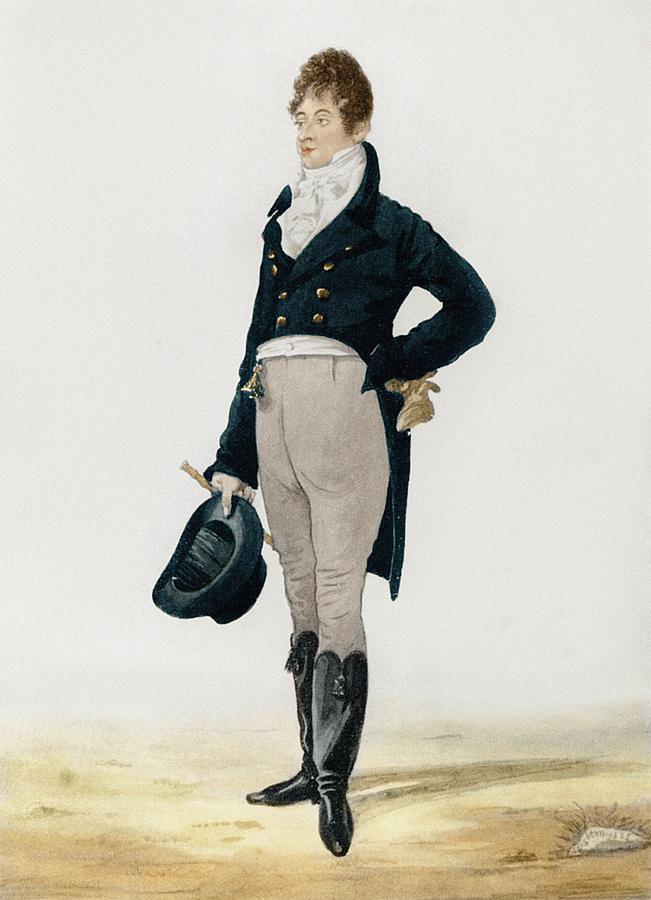
Brummell was an influencer well before twenty-first century social media. He revolutionized men’s fashion, perfecting the simpler silhouette made by dark jackets and full-length trousers instead wearing the colorful velvets and knee breeches of earlier generations. His unadorned style was much imitated by fashionable society, particularly how he tied his cravats. Many of the quirks you might see in show or film set in the Regency era—men having their boots polished with champagne, having elaborately brushed hairstyle, and above all those giant swathes of linen around their necks—these all come from Brummell.
Who was George “Beau” Brummell (1778–1840)?
Beau Brummell was the king of Regency-era dandies. Brummell was also close friends with the Prince Regent (later King George IV), and, for a time, a darling of London society. Brummell also was notable for bathing daily, very much not the norm in the 1810s. As a leader of society, he was known for his quick wit as much as his impeccable tailoring. However, he began to fall out with the Prince Regent in 1811, though it did not impact his social standing at the time. His debts, however, grew, and he ultimately owed creditors thousands (if not hundreds of thousands) of pounds.
What did Brummell do in France?
Brummell fled England for France in 1816 to avoid going to debtor’s prison. He first arrived in Calais, where he lived for years as a major society figure, though still always in debt. These financial difficulties meant he needed to work, and he accepted a position as consul for England in Caen. He moved there in 1830, working at 47 Rue des Carmes. After two years as English consul, however, he was dismissed from the job. 1835 saw him arrested for debts accrued in France and jailed, though his friends helped liberate him after a few months. Suffering from syphilis, the Beau passed his final years in the Bon Sauveur asylum just outside of Caen, where he died on 30 March 1840.
Where is Brummell’s grave?
Brummell is buried in the Protestant Cemetery, on the Université de Caen’s grounds. Read more about how I found Brummell’s grave here.
Brummell Walking Tour Preview
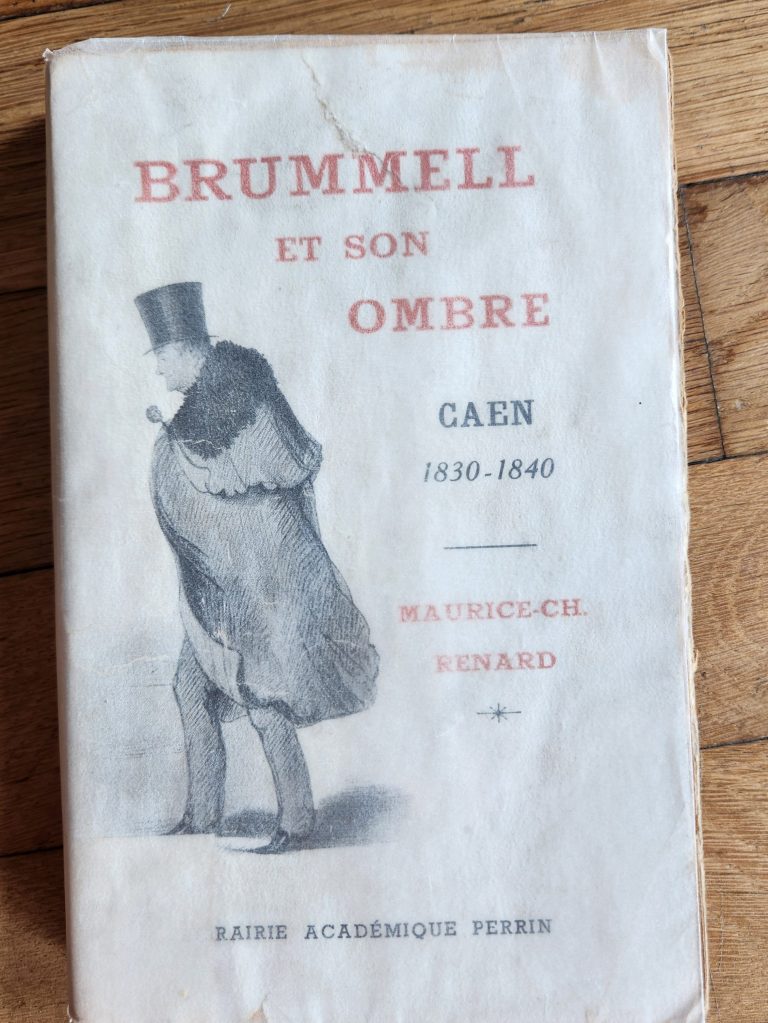
Inspired by this book written by Maurice-Charles Renard in 1944, I’m in the early stages of planning out a walking tour of Caen that gives a taste of where Brummell worked, lived, and died. Aimed at anyone interested in history — tourists, students, locals — this route will also give a taste of Caen in the early 1800s, its relationship with England and the rest of France, and insights into Brummell’s final years as a still-famous figure.


 Bethany Qualls